COTS requirements require an additional solutioning phase in addition to custom built implementations. These two distinctly separate phases cannot be combined as users must be free to express needs that are not influenced by product or vendor. Using requirements or processes that do not originate from the business can easily lead to:
- The solution being uncomplete or flawed
- Activities being performed off-line, typically using spreadsheets with all their inherent problems
- Reluctance to adopt a new solution
The first phase of creating requirements should only involve corporate members, possibly supplemented by an independent Business Analyst who has the appropriate experience to elicit and create the necessary deliverables. The second phase will involve a Solutioning Analyst/Architect from the vendor organisation or an independent consultant who has intimate knowledge of the chosen solution.
Gathering requirements for a typical simplified purchasing process are shown below; the activities start at identifying a need through to payment, these are listed in the table below:
| ID | Activity | Automated |
| 1 | Identify need | No |
| 2 | Raise purchase requisition | Yes |
| 3 | Capture vendor details | Yes |
| 4 | Create purchase order | Yes |
| 5 | Send purchase order to vendor | Yes |
| 6 | Receive product | No |
| 7 | Capture delivery details | Yes |
| 8 | Receive invoice | No |
| 9 | Capture invoice details | Yes |
| 10 | Match purchase order, delivery and invoice | Yes |
| 11 | Pay vendor | Yes |
A brief review of the activities will reveal that processing at each stage will be dependent on information captured in previous activities; this means that activities cannot be dealt with in isolation from one another.
As the second, or solutioning, phase progresses, there may be gaps identified between business requirements and the standard capabilities provided by the chosen solution.
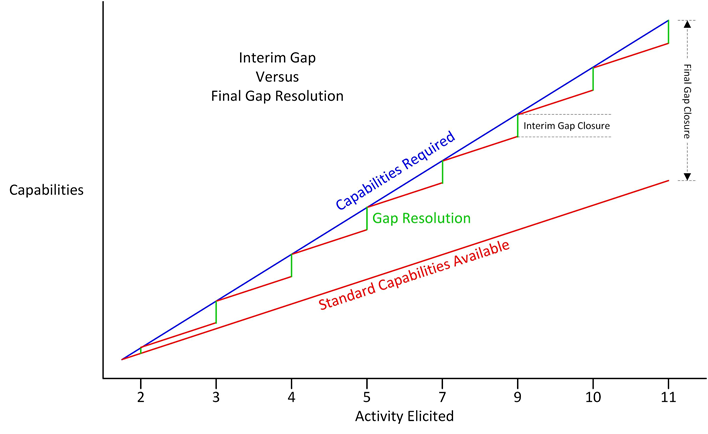
The diagram shows the benefits of closing the Requirement/Solution gaps as the solutioning phase progresses. Leaving gap closure until the very end can add severe challenges and may call for earlier solutioning activities to be reworked.
Always ensure before the solutioning stage commences that the requirements are:
- Complete
- Clear
- Reasonable
- Understandable (jargon-free)
- Achievable
If you cannot be sure of the above then the chances of a successful implementation bringing all the business value promised, considering timescales, costs and quality, will be very difficult to achieve.